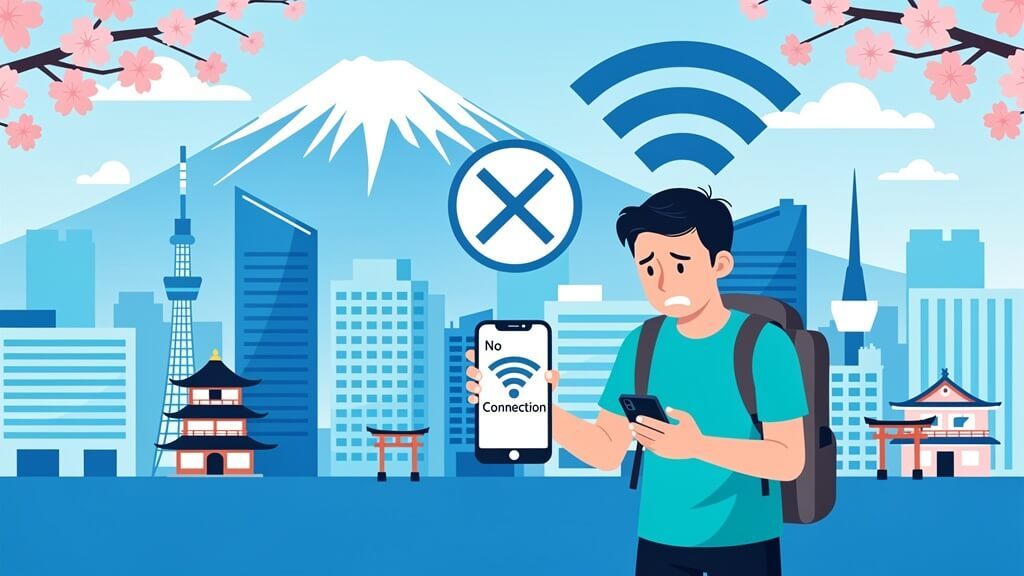
Why WiFi is Still Japan’s #1 Tourist Complaint (And How to Fix It)
31.5% of Tourists Complain About This
Why WiFi is Still Japan’s #1 Tourist Complaint
Hotels have it, but is it enough? Here is the reality of staying connected in Japan and how to prepare before
you land.
2025 Updated Data eSIM Guide Security Tips
Top 3 Connectivity Solutions at a Glance
1. eSIM
Best Choice (35.9%)
No physical card, instant setup, and cheapest for solo travelers.
2. Pocket WiFi
For Groups
Shareable connection for families. Heavy to carry and requires charging.
3. Prepaid SIM
Old School
Reliable but easy to lose your original SIM. Buying at the airport is easy.
Why 31.5% of Tourists Are Frustrated
According to a 2023 survey by “Earth Walking,” WiFi environment is the #1 inconvenience for visitors. Despite
“Free WiFi” stickers everywhere, the reality is different.
1
Complex Connection Procedures
“Free WiFi” often requires email registration, social login, or downloading a specific app. The forms are
frequently in Japanese, long, and intrusive.
“I gave up after 10 minutes of trying to register my email.”
2
The Urban-Rural Gap
While 72% of visitors find WiFi convenient in Tokyo or Osaka, only 37% feel the same in
rural areas. If you plan to visit hot springs or mountains, coverage drops significantly.
3
Hidden Passwords & Security
Passwords are often displayed only on TV screens in Japanese or hidden in guidebooks. Furthermore, many
public networks are unencrypted, posing a security risk for credit card transactions.
Unusable Speeds
Hotel WiFi often throttles to a few hundred kbps during peak hours (8-10 PM), making video calls
impossible.
Usability
Japanese UI design is often text-heavy and confusing for foreigners, leading to an “unfriendly”
experience.
How Japan Compares to Neighbors
Country
Avg Speed
Tourist WiFi Experience
Singapore
386.96 Mbps
World Class. High quality public WiFi everywhere.
Taiwan
291.38 Mbps
Excellent. “iTaiwan” is multi-lingual and easy.
Korea (Seoul)
219.22 Mbps
Fast. High penetration in urban areas.
Japan (Tokyo)
220.42 Mbps
Complex. Speed is fine, but access is difficult.
Source: Speedtest Intelligence & Tourism Agency Data
The Solution: How to Stay Connected
1. eSIM (The New Standard)
With a 35.9% usage rate among tourists in Osaka, eSIMs have become the #1 choice. You simply scan a QR code
before your flight, and you have internet the moment you land.
Airalo
Best for global travelers
User-friendly App
10M+ Users
1GB from $4.50
STABLE
World eSIM
Best connectivity
Japanese Company
High speed stability
Unlimited plans available
MATCHA eSIM
Best Value
Often has 40% OFF
Docomo Network
Lowest cost market rates
SMART TRAVEL TIP
Don’t Struggle with WiFi AND Luggage
Trying to connect to complex airport WiFi while dragging heavy bags and navigating trains is a recipe for
stress. Book a private transfer to get straight to your hotel, where you can set up your connection in
peace.
Pros: Connects up to 10 devices. Great for families sharing cost. Cons: Another device to charge. Expensive for solo travelers. Cost: Approx. ¥3,000 – ¥6,000 per week.
Int’l Roaming
Pros: Easiest. No setup required. Keeps your number. Cons: Very expensive (approx. $10/day). Slow speeds. Usage: 21.5% of travelers use this for convenience over cost.
Connected? Now Explore Beyond Tokyo.
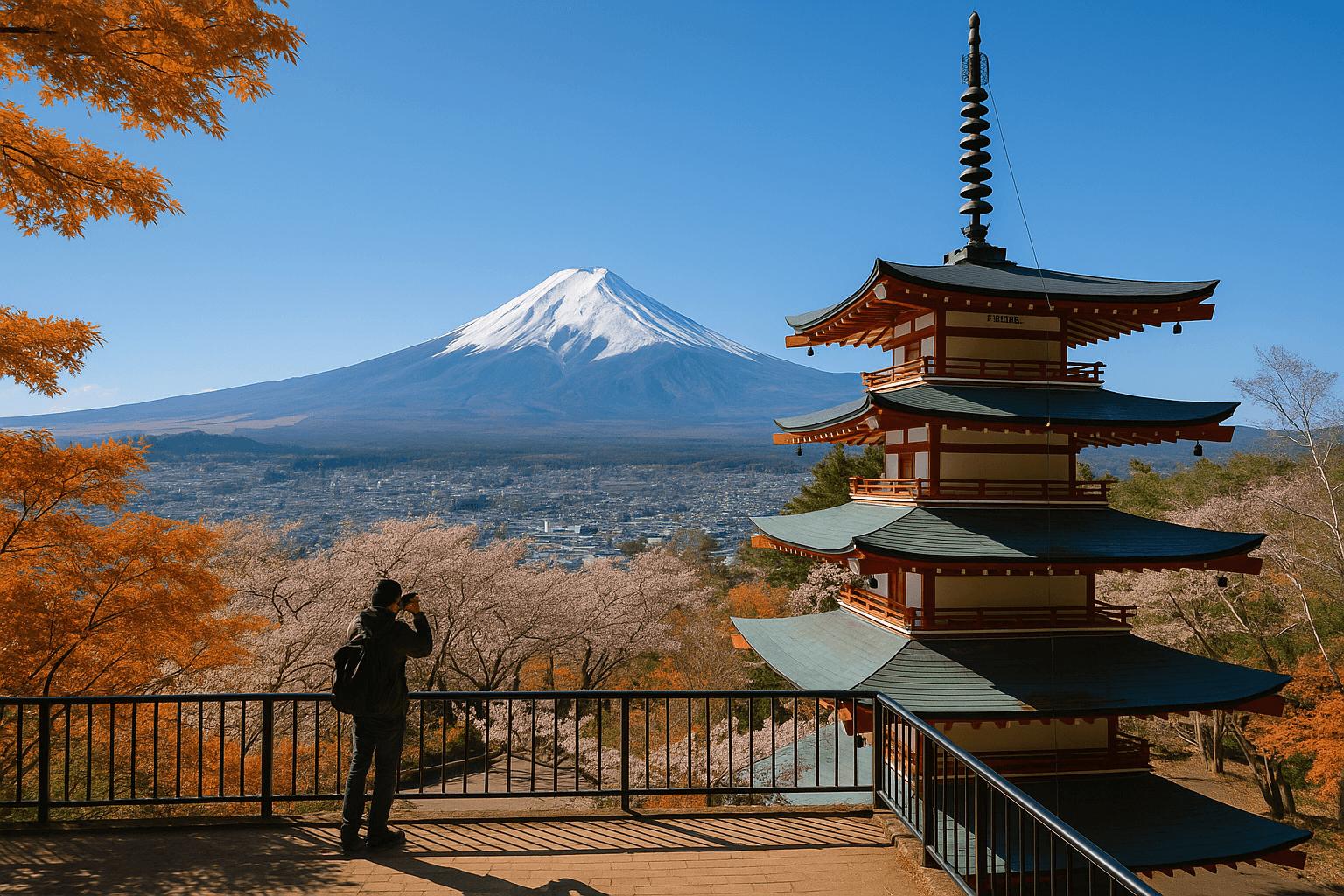
Once your internet is sorted, venture out to see Japan’s icon. With reliable WiFi through your eSIM or pocket WiFi, you can share stunning photos in real-time from Mt. Fuji and Hakone’s hot spring resort area.
Japan is technologically advanced, but its public WiFi infrastructure is surprisingly difficult for tourists
to navigate. To avoid being part of the 31.5% who complain about connectivity:
1. Prepare Before FlyingDownload an eSIM or book a Pocket WiFi.
2. Have a BackupDon’t rely 100% on hotel connections.
Enjoy your trip to Japan, stay connected, and share your memories instantly!